
Showing posts with label Game Reflections. Show all posts
Showing posts with label Game Reflections. Show all posts
Thursday, August 22, 2024
Retrospectives: Egg of the Wyrm

Tuesday, March 12, 2024
The Planet Crimson

Crimson is covered with an insidious thick red fog that gives the planet its name. It rises two miles above the planet's surface, sends most life into a helpless stupor, and corrodes machines from the inside. Just above the fog hovers massive machines kept aloft by powerful psionic flows emanating from the planet beneath. Strange gears four hundred meters across slowly turn in the red skies, while the factories attached to them use some unfathomable process to produce the most powerful psionic drugs in the grand cluster. Bolted onto these factories centuries later are a collection of homes and structures housing the modern population, a collection of native workers who can see the psionic flows emerging from below, occupying soldiers guarding the wealth of the planet, and doomed prisoners recovering from their exposure to the mist in the mines below.
On the surface itself, protected and isolated by the fog, is an alien ecology featuring forests of an organism shaped like coral and a host of small hardy creatures that thrive in the otherwise hostile fog. dotting this alien wilderness are the old ruins of vast cities made of smooth towers with mushroom tops, massive vents in the surface spewing out the fog, miserable mines where the enslaved criminals of the empire are forced to harvest exotic psionic drug predecessors, and the camps of the flappers, a hairless winged race with a great crests, long beaks, and a taste for human flesh.
Crimson was one of the most memorable worlds of my campaign Called From Exile, and I'm planning a campaign set entirely on it. It is visually memorable, hides immense secrets, and easily lends itself to intrigue, being isolated, hostile, and at the center of grand politics, all at the same time.
Thursday, February 1, 2024
Tech Paradigms in the Grand Cluster
The Grand Cluster , the setting for Called from Exile, hosted a wide variety of technology: almost the entirety of the ultra-tech book exists in there somewhere. But I didn't want characters to be using all of it, because the point was to have lots of homages to various science fiction settings next to each other and interact with each other, and I wanted the PC's to feel that.
So the base TL was 10, but access to most technology had to be purchased with "technology points". These didn't raise player's Tech Level so much as control what genre of science fiction they could buy gear from. I let them choose a ranged weapon class for free (lasers is a class, slug throwers is another, force beams is another), as well as a specifying what their typical comms/computer interface looked like. For most other PC-style gear, they needed to select options with technology points. This was a player decision, but it was about their home culture as much as it was about them.
Thursday, January 18, 2024
The Grand Cluster and the Moment Drive
Back in Late 2021 I ran a game by the name of "Called from Exile". It was a high-powered game with sweeping scope, in a setting designed to accommodate homages any science fiction franchise I wanted. We had a lot of fun with that game, and I loved the resulting setting... or settings, as the case may be.
Here, I share the Faster-Than-Light system, which is key to making the setting work, and the broad brushstrokes of "The Grand Cluster"
Thursday, February 2, 2023
Long Range Tactical Combat In Gurps
 |
| Art Assets for Mooks! |
Monday, October 31, 2022
Snowmobiles in Gurps
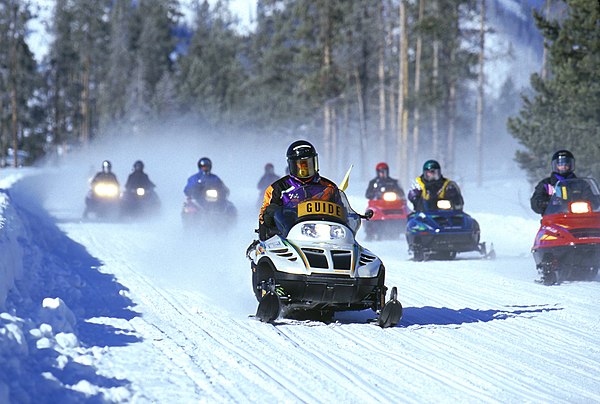
The same thing I did last time I needed snow mobiles. Use the stats of motorcycles from the basic set. Its simple-- but how close are they really?
This is the second time I'm doing this, and I expect it to matter more this game, so I started looking up stats. Snowmobiles are actually really fast. Maybe even faster than the bikes, though that may be only under ideal conditions. The enthusiasts also claim they accelerate faster than motorcycles. So we can leave those numbers. Snowmobile's range is a lot lower than bikes: they get terrible gas mileage, so we'll halve the range. They're also a bit harder to handle than motorcycles, but they're more stable. So -1/+1 to Hnd/SR. The weights seem to be in the correct ballpark, and the costs aren't bad either. I'm not sure about ST, so we leave it there.
So to use a motorcycle's stat-block for a snowmobile
- drop handling by 1, raise stability rating by 1
- halve the range
And that's it! You have a range of snowmobiles! I hope you find this useful. Its a fairly quick and dirty conversion, but it seems functional enough. If I'm weird and the only GM who ever ends up using snowmobiles in their games, I hope I have now inflicted the need to use snowmobiles in the game upon all of you. Happy adventures in the snow!
Tuesday, October 11, 2022
Monster Hunter Pregens
Back in 2016, I created a series of characters for monster hunters. The goal was to see how well characters with powers, wildcards, or inhuman templates did in various adventures. I never finished the full set of games, but my conclusion was that the easiest group to build, and funnest to play, were the inhumans. They had strong character identities, were better rounded, and always seemed to have both something to do and some amusing limitation getting in the way. They were not particularly efficiently built or optimized, but I think that was part of their charm. At any point in the game, everyone had something to do.
I've written up these characters as pregens, and generated some faces for them with artflow.ai. Each character has a sidekick template from Gurps: Monster Hunters 4, plus a monstrous template to add an inhuman race. Their inhuman templates are drawn from pyramid, blogs, and one is even from the original book. Most have their two templates contrasting each other rather than complimenting: that's part of the fun. I hope you find the pregens useful in some way: I've found the characters to be a lot of fun.
I've written up these characters as pregens, and generated some faces for them with artflow.ai. Each character has a sidekick template from Gurps: Monster Hunters 4, plus a monstrous template to add an inhuman race. Their inhuman templates are drawn from pyramid, blogs, and one is even from the original book. Most have their two templates contrasting each other rather than complimenting: that's part of the fun. I hope you find the pregens useful in some way: I've found the characters to be a lot of fun.
- Ernest Clay, Whitecoat Golem
- Dan White,Vampire Muscle
- Wesa, Ghostly Brother
- Michael Issac Babbage, Android Geek
- Aaron Emersol, Immortal Fixer
I've really enjoyed these characters. I hope you enjoy them as well!
Friday, November 5, 2021
Overgrown Secrets: Tribal Lands Map
Here is the map of the overgrown secrets setting:
- Each color of Green is its own Tribe.
- Each shape is the territory of a single clan
- Each circle is a village. Its name is in white text. The names are rather literal: frog bend is known for having a lot of frogs.
- Each Square is a ruin
- Tribes with Red borders and villages colored grey are controlled by shapeshifters
- There are ruins and villages you can't see away from the river
- The "Central" Clan in the campaign was the one touching both Frog Bend and Four Rocks

This is my GM map, with the extra villages and ruins marked
- Yellow Squares are ruins with Pyramid Provosts
- Red Squares each have a single Crypt Spirit
- Grey Squares are just empty ruins
- The white text marks the five crypt spirits that work together, labeled by their personality. "Relic Tomb" marks the tomb of the crypt spirit who taught the other four how to become crypt spirits.

this is pretty much for people who want the run the adventure, which is coming soon, or people wanting a bit more insight on how the clans, tribes, villages, and ruins were set up. The map was consulted fairly often by the players, and I think it really helped run the adventure.
Thursday, September 23, 2021
Overgrown Secrets: The Forest People
 |
| Map of Overgrown Secrets |
Thursday, September 16, 2021
Overgrown Secrets: The Pyramid Provosts
The last "Monster Type" in Overgrown Secrets is perhaps the most abstract: the Provosts. These were magically created beings powered by a large magic device in the center of cities (ruins, in the case of overgrown ruins). The Provosts had Illusions, Clairvoyance, and Telekinesis, but these powers were confined to the area immediately around their device. Provosts were dedicated to upholding the interests of a kingdom that died out a long time ago. The result looked a lot like a science fiction AI, complete with holograms and wonky programming directives.
Monday, August 23, 2021
Overgrown Secrets: The Anhui

Surrounded by monsters that thrive on human souls, the forest tribes of Overgrown Secrets have a secret weapon: the Anhui. Anhui are six-limbed monsters of green chitin and bone. Their parasitic larva transform its host into a powerful warrior for a short time before killing them. The forest tribes intentionally raise and keep these monsters to produce powerful warriors in times of distress, known as "Bearers". Each tribe has a "Keeper" that tends to its dormant and caged Anhui until they are needed.
Anhui didn't actually see much screen time in Overgrown Secrets, but they easily could have, and they had a strong effect on the setting.
Thursday, June 10, 2021
Overgrown Secrets: Crypt Spirits

Crypt spirits are humans who have preserved their soul using a magical metal apparatus whose secrets have been lost to time. They can survive indefinitely in this apparatus, but can do very little while inside. In order to act they must take over someone else's body and burn their host's soul as fuel. While possessing that body, they have great power, but they will need to consume a new body and soul within 40 days. Thus they are driven by their constant need for hosts to be anything more than a powerless consciousness in a crypt.
Thursday, September 29, 2016
Lawmen Of Borlo: Reflections on Gameplay
I just finished a campaign: Lawmen of Borlo. Its an interesting time when you finish a campaign and move on to a new one, and a good time to consider what went well and what didn't. This is also a big learning experience for me, because its only my second roll20 gurps campaign.
The campaign premise was:
I insisted that players come up with the questions to ask, rather than just rolling against, say... computer operation and finding out everything they needed to know. This was intentional stylistic choice for a cops game. It really helped to bring the world to life -- players cared about the details, and we had lots of fun extrapolating what WOULD be known in a given science fiction situation. It also helped to keep players involved -- one player usually had the spotlight, but everyone else was thinking of questions they wanted asked. This isn't for every game, but I highly suggest it for a mystery game.
I'm glad I bit that bullet. Its helped with the game a lot, and its helped build that camaraderie between players I've always assumed was natural. If you are trying to GM or looking for a GM, you are there as much to help the players get along as you are to present a world. The good news is that gaming culture gives you the tools to make that easy, and it actually hasn't been that much work. It was just essential for me to realize that its my job, no one else will do it, and when you have a grab bag of players off the internet, it needs to be done.
Why didn't I pick this up before? Well, my prior GM experience is either on PbP, which tends to minimize personal issues in favor of the game (typing is much more expensive than talking), or with my relatives. And with the relatives I played with, I'm pretty much the alpha by dint of age and longstanding relationships. And everyone knows each other really well.
I also started keeping track of time this game. It worked really well, added an aspect of management, and helped in organizing NPC actions. I'll probably continue to do it.
The other big lesson was: Play what you want to play. When I started playing on roll20, I intentionally went with 'popular' (meaning common) options with the intent to switch to something I personally wanted more later. I don't think I got more interest with the generic, and I certainly had a lot more. So I'm going to play what I want to play.
This isn't to say that "bad games" don't exist. Many ideas won't be valid, or will require extra out of your players. Before you go ahead and play, make sure its a good idea that will be fun for everyone. but that has very little to do with setting, and more to do with making sure the focus is still on the players and they can have fun. So from now on, I'm saying goodby to generic and playing in whatever setting I please! (which is not to say that players don't get a say. I've been vetting multiple ideas and giving them a choice first).
The PC's had lots of decisions, and the combination of "you can do anything" and "you're supposed to be doing this" was fun to watch. They tracked down people out of order, caught me by surprise, and completely missed possibilities. This was entertaining to watch in a way that combat just can't match.
It was also really nice to watch players get immersed in the setting, and understand where they were and what the world was like. I think the key was to make those things matter to the plot.
Last of all, and I'll talk about this in a later post, I ran a game with two minor combats that still remained tense and engaging. I don't enjoy slaughter fests, and I consider doing a non-combat-oriented game in real time with multiple players to be a personal success. Ironically, lives WERE at stake. They just weren't decided by who had fancier gun-play.
I also have come to the conclusion that player knowledge of numbers matters. Secret rolls may be ominous, but there is a strength to declaring exactly what a PC needs in order to succeed or fail. In some ways hidden rolls can make GMing easier, but I'm realizing its a crutch. Game-play is about making decisions, and without information, there is no decision. So I'm going to need to work on that.
I hope you can learn from my mistakes.
The campaign premise was:
The planet of Borlo was a backwater for over 40 years. Then about 3 weeks ago, a citizen found alien ruins-- the first alien ruins to be had in humanities long and lonely search of the stars. Now there is a rush like has not been seen for centuries: men and women are flooding into a formerly barren wasteland in search of wealth.The PC's were planetary marshals given cases to solve, spread out over the planet. They solved two cases, each with multiple stages of finding suspects. They did pretty well, all things considered: of the 9 criminals they chased, one was left with a warning and remained a police informant, three got comparatively light sentencing (all in exchange for names and or testimony), one got away, and four got hit hard.
Things the Players Enjoyed
Negotiating with prisoners was a large part of the game, and one the players really seemed to enjoy. A lot of the time you never know if an NPC is going to grab their attention or not, but each time they picked up a batch of crooks, one of them grabbed the attention of the PC's, and they connected with a string of criminals, and actually cared about what happened to them in the end -- even if 'cared' means 'I want to make sure you don't get off with a lite sentence'! A good part of this was how much work they put into figuring out who the NPC was before they ever met them. PC's generally connect with NPC's they remember, and making the goal of the adventure finding someone is a good way to make them memorable.I insisted that players come up with the questions to ask, rather than just rolling against, say... computer operation and finding out everything they needed to know. This was intentional stylistic choice for a cops game. It really helped to bring the world to life -- players cared about the details, and we had lots of fun extrapolating what WOULD be known in a given science fiction situation. It also helped to keep players involved -- one player usually had the spotlight, but everyone else was thinking of questions they wanted asked. This isn't for every game, but I highly suggest it for a mystery game.
GMing Lessons
This game saw a bit of player drama. And I finally bit the bullet and realized that my job as a GM is NOT about merely presenting adventures, but about balancing personality issues, ensuring that everyone else speaks up, and generally being the social grease. This is not something that I wanted do. I wish I could just play a character called "The world" and present challenges for the players.I'm glad I bit that bullet. Its helped with the game a lot, and its helped build that camaraderie between players I've always assumed was natural. If you are trying to GM or looking for a GM, you are there as much to help the players get along as you are to present a world. The good news is that gaming culture gives you the tools to make that easy, and it actually hasn't been that much work. It was just essential for me to realize that its my job, no one else will do it, and when you have a grab bag of players off the internet, it needs to be done.
Why didn't I pick this up before? Well, my prior GM experience is either on PbP, which tends to minimize personal issues in favor of the game (typing is much more expensive than talking), or with my relatives. And with the relatives I played with, I'm pretty much the alpha by dint of age and longstanding relationships. And everyone knows each other really well.
I also started keeping track of time this game. It worked really well, added an aspect of management, and helped in organizing NPC actions. I'll probably continue to do it.
The other big lesson was: Play what you want to play. When I started playing on roll20, I intentionally went with 'popular' (meaning common) options with the intent to switch to something I personally wanted more later. I don't think I got more interest with the generic, and I certainly had a lot more. So I'm going to play what I want to play.
This isn't to say that "bad games" don't exist. Many ideas won't be valid, or will require extra out of your players. Before you go ahead and play, make sure its a good idea that will be fun for everyone. but that has very little to do with setting, and more to do with making sure the focus is still on the players and they can have fun. So from now on, I'm saying goodby to generic and playing in whatever setting I please! (which is not to say that players don't get a say. I've been vetting multiple ideas and giving them a choice first).
Things I enjoyed
I learned that I get tired of playing in the same setting for too long. Last game I played I was all played out by the end. I still needed to finish the mission, and if you're tired of a game, it can really drag. This time I watched for that effect, and ended the campaign before it got old. This let me do a proper ending, and we had a nice 30 minutes at the end where we talked about what happened to each of the characters after the campaign.The PC's had lots of decisions, and the combination of "you can do anything" and "you're supposed to be doing this" was fun to watch. They tracked down people out of order, caught me by surprise, and completely missed possibilities. This was entertaining to watch in a way that combat just can't match.
It was also really nice to watch players get immersed in the setting, and understand where they were and what the world was like. I think the key was to make those things matter to the plot.
Last of all, and I'll talk about this in a later post, I ran a game with two minor combats that still remained tense and engaging. I don't enjoy slaughter fests, and I consider doing a non-combat-oriented game in real time with multiple players to be a personal success. Ironically, lives WERE at stake. They just weren't decided by who had fancier gun-play.
Things I Could Have Done Better
We had a player than kept notes. It was in many cases a life-saver: we'd start each session by reading the notes that he took and that would usually be enough to jog my memory. I could have kept my private notes better. A GM has a lot that he's doing, but in this case, I think we would have had a stronger game if I had kept more than the most minimal of notes. This became very apparent when our note-keeper couldn't make a session, and we had to remember what happened earlier.I also have come to the conclusion that player knowledge of numbers matters. Secret rolls may be ominous, but there is a strength to declaring exactly what a PC needs in order to succeed or fail. In some ways hidden rolls can make GMing easier, but I'm realizing its a crutch. Game-play is about making decisions, and without information, there is no decision. So I'm going to need to work on that.
In Conclusion
I learned a lot, and I enjoyed the campaign. While I pride myself as a setting builder, I'm a newbie GM. I'll soon be putting up info on setting, and a few more thoughts inspired by the campaign.I hope you can learn from my mistakes.
Subscribe to:
Comments (Atom)